
What is CBAM and How Will It Impact You
The Carbon Border Adjustment Mechanism (CBAM) puts a price on carbon emissions embedded in imported goods. VITA's specialist team helps UK and EU importers navigate compliance, reporting, and carbon accounting, before penalties begin.

What CBAM Means For You
A proactive approach to managing the new tax could involve renegotiating or updating contracts with suppliers to ensure that emissions data is provided and verified, investing in carbon accounting technology and ultimately switching to suppliers who are more advanced in their decarbonisation approach.
Compliance Risks
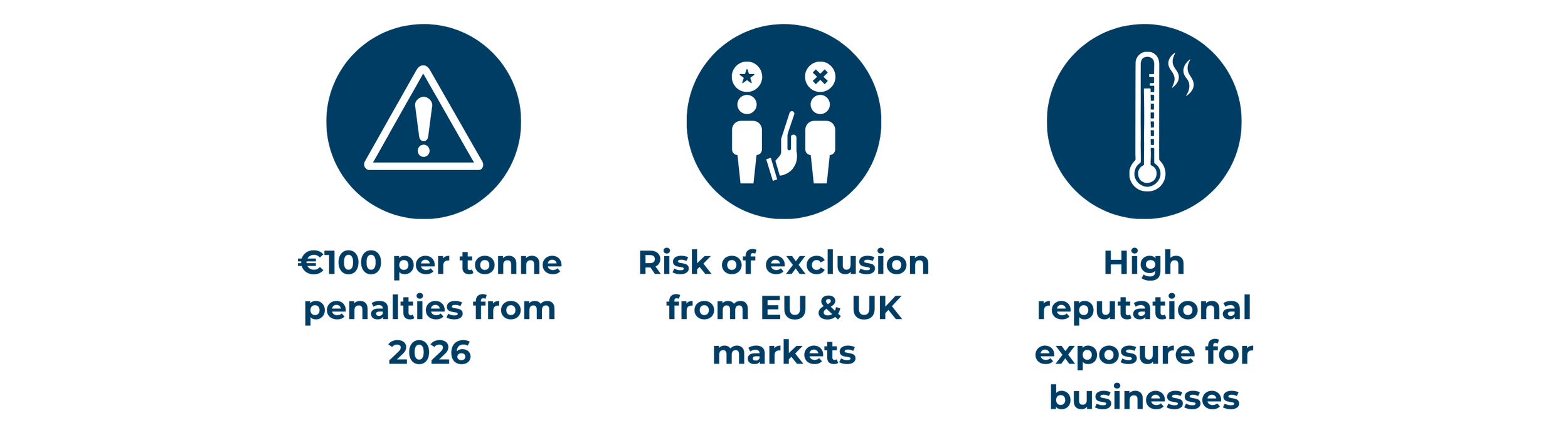
Non-compliance with CBAM obligations carries serious consequences. From 2026, both the EU and UK will introduce strict enforcement measures aimed at ensuring accurate carbon reporting and certificate surrender. Companies that repeatedly fail to meet these obligations may face escalating restrictions, including limitations on trade participation and increased regulatory scrutiny. Beyond the regulatory impacts, businesses also risk damaging trust with customers, partners and investors, who now place far greater emphasis on transparency and climate accountability.
“The new environmental indirect tax landscape – and carbon taxes in particular – will keep evolving, with more sectors likely to be brought into scope and reporting requirements set to become more stringent.”
Craig Stobo, CBAM specialist
What is CBAM
The Carbon Border Adjustment Mechanism (CBAM) is an EU policy designed to put a price on carbon emissions embedded in imported goods, initially targeting high-emission sectors like steel, cement, and fertilizers. Its goal is to prevent “carbon leakage” and create a level playing field by aligning costs for imports with existing EU carbon pricing.
CBAM shifts decarbonisation from incentives to penalties, driving businesses towards greener production methods through financial accountability rather than voluntary measures. The UK is introducing its own CBAM from 1 January 2027.

The Latest CBAM updates from VITA




The CBAM Intelligence Report is a quarterly briefing from VITA's dedicated CBAM practice, backed by over 125 years of combined experience in indirect tax, law and policy. It delivers sharp, practical analysis on what's changed, what it costs, and what you should be doing about it. No jargon for the sake of it, no 47-page PDFs that answer a question nobody asked. Just clear intelligence written for people who make decisions, not people who make footnotes.
Whether you're facing your first CBAM declaration or advising a board that needs answers fast, this is where to start. Please click on the image to download the extract, or sign up to receive the full report here.
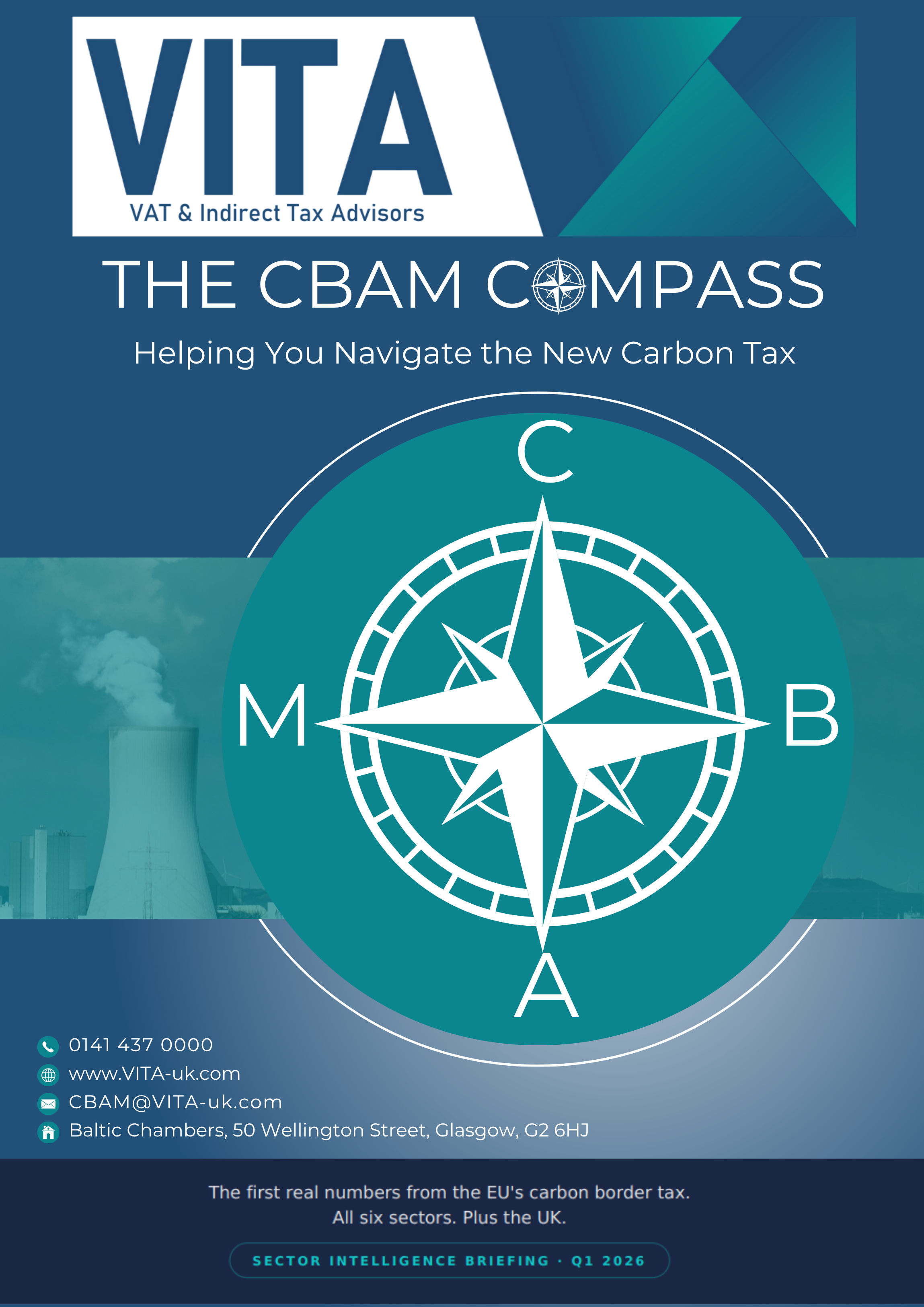
Click on the above to download the extract free
Get to Know Your CBAM Team
About VITA
With over 125 years of combined experience, spanning across various sectors and industries, our team is committed to providing you with the highest level of guidance and support. We take pride in staying ahead of the curve by continuously updating our knowledge and sharing insights on the latest developments in Indirect tax.
Craig Stobo

Craig is VITA’s CBAM Partner. He has over twenty-five years‘ experience advising businesses and governments in the UK and globally on indirect tax, law and policy.
He now leads VITA’s CBAM practice focusing on helping clients navigate the new tax and carbon accounting requirements - the next major frontiers in the evolving indirect tax landscape.
Why Choose Us?
Our CBAM team, led by partner and CBAM specialist Craig Stobo, is at the forefront of discussions on this new tax. Craig brings extensive experience in guiding businesses through complex tax and environmental regulations. Supporting him is Graeme Moffat, our CBAM Data Engineer. Together with the wider VITA team, they deliver practical, actionable solutions for every stage of CBAM compliance.
Graeme Moffat

Graeme is VITA’s CBAM Data Engineer. After two decades in business, Graeme has specialised in indirect tax since 2022, with a keen interest in the evolving environmental taxes landscape.
His data management skills help clients to manage the novel challenges of the new field of carbon accounting, which is business critical in meeting the objectives of the new environmental indirect taxes.

“In the evolving CBAM landscape, data is going to be the new oil. Companies who engage to understand the impact at an early stage will lead the way.“
Graeme Moffat, CBAM Data Engineer

Industry Illustrations
Inflationary
CBAM could amplify inflation across a huge number of sectors, ranging from car manufacturing to agriculture. From 2027, imports of carbon-intensive materials, such as steel for vehicles and fertilizers for farms, will incur CBAM costs. These expenses cascade through supply chains, raising production costs and consumer prices. Farmers face higher input costs, while automakers absorb increased material charges, potentially passing them on to buyers. Without mitigation strategies, CBAM risks fuelling price volatility and squeezing margins across essential industries.
“A proactive approach to managing the new tax could involve renegotiating or updating contracts with suppliers to ensure that emissions data is provided and verified, investing in carbon accounting technology and ultimately switching to suppliers who are more advanced in their decarbonisation approach.”
Craig Stobo, CBAM specialist
Sector Challenges
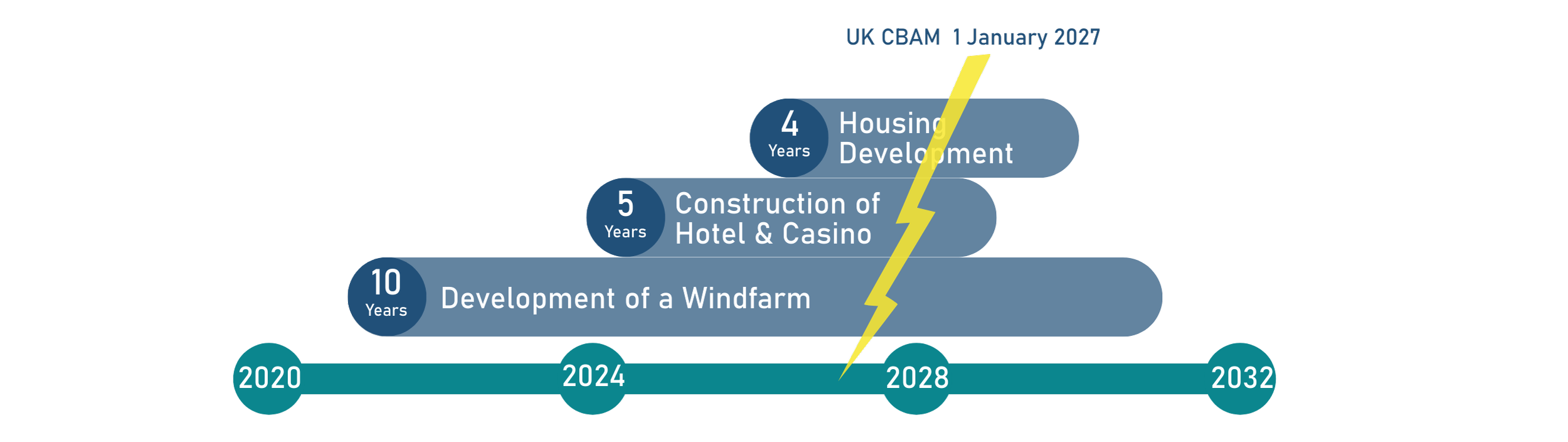
It’s very common for large organisations to have a multi-year lifecycle on projects. For example, a windfarm development could take over 10 years; a hotel and casino development could take over 5 years; and a new housing project could take over 4 years. Given that CBAM is coming soon, there are major risks for organisations that are not prepared - these three examples alone would see an impact on the cost of steel, iron, and cement once CBAM is added.
CBAM Compass Packages
Guidance that works for you


Essential Support
£500* per month
Monthly insights from our specialists to help you navigate your CBAM journey. This will be provided in a user-friendly format, including various media such as written, visual, audio and video. We will provide at least three updates per month.
Strategic Advisory
Our CBAM specialists can provide strategic advisory services tailored to your business’s needs. These include but are not limited to the services shown in the side panel.
Suggested Services
Impact Assessments
Readiness Reviews
Gap Analysis
Strategic Optimisation
Bespoke Assistance
Bespoke pricing
Expert Guidance
Our CBAM specialists are available to meet with you, fully explain the latest position and answer any questions you may have specific to your business. We recommend a minimum of two consultations per annum to enable you to understand the forthcoming implementation requirements, how they will impact your business and to ensure your business is ready for the new tax going live.
*Prices above exclude VAT

£1,000* per meeting